
Loading...
Using Artificial Intelligence (AI) on ASTM standards and related intellectual property is prohibited. Violations will result in suspension of access.
By David Walsh
Jan 05, 2026
Amer Bin Ahmed, 2026 Chair of ASTM’s Board of Directors, becomes poetic when speaking about the importance and significance of standards. “Standards are the invisible architecture that holds global progress together,” he says. “They are the language that connects technology, quality, and society. 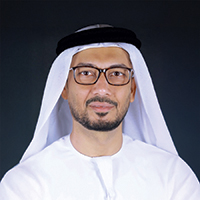 Amer Bin Ahmed
And with more than two decades of experience in building and construction materials across the Middle East and North African (MENA) region, Bin Ahmed knows firsthand how standards shape trust, safety, and innovation, as well as how they can transform markets. His journey began in the field, on construction sites across the Middle East, where early exposure to execution and coordination challenges shaped a lasting belief: reliable outcomes depend on clear expectations, disciplined systems, and consistent practices.
Before he took on his current standards leadership roles, Bin Ahmed served as managing director of Knauf Middle East, a subsidiary partner of the multinational construction company Knauf, where he was responsible for building a large-scale sustainable business operation in the Middle East and India.
During his tenure at Knauf, Bin Ahmed’s commercial success and commitment to standards was recognized with a number of awards. He received a CEO of the Year Award (Future Cities, 2016); the “Made in UAE” Award (2018) for Knauf; recognition from the Dubai Civil Defense and Dubai Municipality; and a second-place recognition for Construction Executive of the Year at the Construction Week Awards (2021). Through his work, the organization was also honored with the Green Award by the Ministry of Infrastructure for its commitment to sustainability.
Prior to his executive roles, Bin Ahmed earned degrees in business and management, and later completed an executive education program at the Massachusetts Institute of Technology that focused on innovation and emerging technologies. This blend of field experience, academic grounding, and continuous learning prepared him for leadership at the intersection of industry execution, regulation, and global standards.
A member of the committees on additive manufacturing technologies (F42) and sustainability (E60), Bin Ahmed credits his positive introduction to ASTM to his mentor, Deg Priest, of Priest Associates, whom he met in Houston, TX, more than a decade ago. Their conversations introduced him to the rigor and global impact of ASTM’s standards-development process, and the encounter left a lasting impression.
“It was an unplanned meeting, at a coffee shop I believe,” Bin Ahmed says. “It’s not common to meet someone so dedicated, but it can change your life.”
At a recent Committee Week, where he was officially passed the Chair’s gavel, Bin Ahmed made clear his intentions as Chair: “My commitment as Chair is simple: to strengthen ASTM’s role as a global partner — connecting nations, industries, and ideas; to uphold the values that built this institution; and to help lead us toward a future where trust becomes the universal language of trade, innovation, and safety.”
In the midst of his busy travel schedule, Bin Ahmed made time to answer a few questions about his upcoming tenure as ASTM Chair and give his perspective on the world of standards.
Q. Can you tell us about your background in construction and building, and how you came to work in your current field?
A. My early professional journey was shaped in the building-materials sector. That experience taught me that standards are not documents, they are systems of accountability.
Over the years, I introduced a full system-based approach to wall and ceiling performance across the MENA region, shifting from isolated product tests to ASTM-driven system engineering for fire, acoustics, structural stability, and indoor environmental quality.
System-based certification transformed the way we built. It showed that performance, safety, and sustainability are not optional. They must be engineered.
Contributing to one of the region’s earliest remote-operated materials testing connections between the UAE and India, long before digital verification became mainstream, taught me that standards, digital tools, and data can dissolve borders — and that quality can scale globally when systems are unified.
Sustainability is a priority for you, as you are a member of the committee on sustainability (E60). Tell us about the work you’ve done here and its importance to you.
As a long-standing member of E60, I see sustainability as a discipline grounded in evidence. Sustainability becomes real only when it is measurable. The committee on sustainability helps industries move from ambition to accountability by giving them metrics, tests, and methods that make sustainability transparent and actionable.
Sustainability is not a separate track, it is a foundational requirement for future competitiveness.
Q. You’re a member of the committee on advanced manufacturing technologies (F42) as well, which is doing a lot of work with cutting-edge technologies. What can you tell us about the standards currently being developed there and their impact?
A. As an active member of F42, I have worked closely with emerging technologies that reshape industry.
The committee on additive manufacturing technologies is writing the rules of trust for the next industrial era. Innovation without standards is experimentation. Innovation with standards becomes transformation.
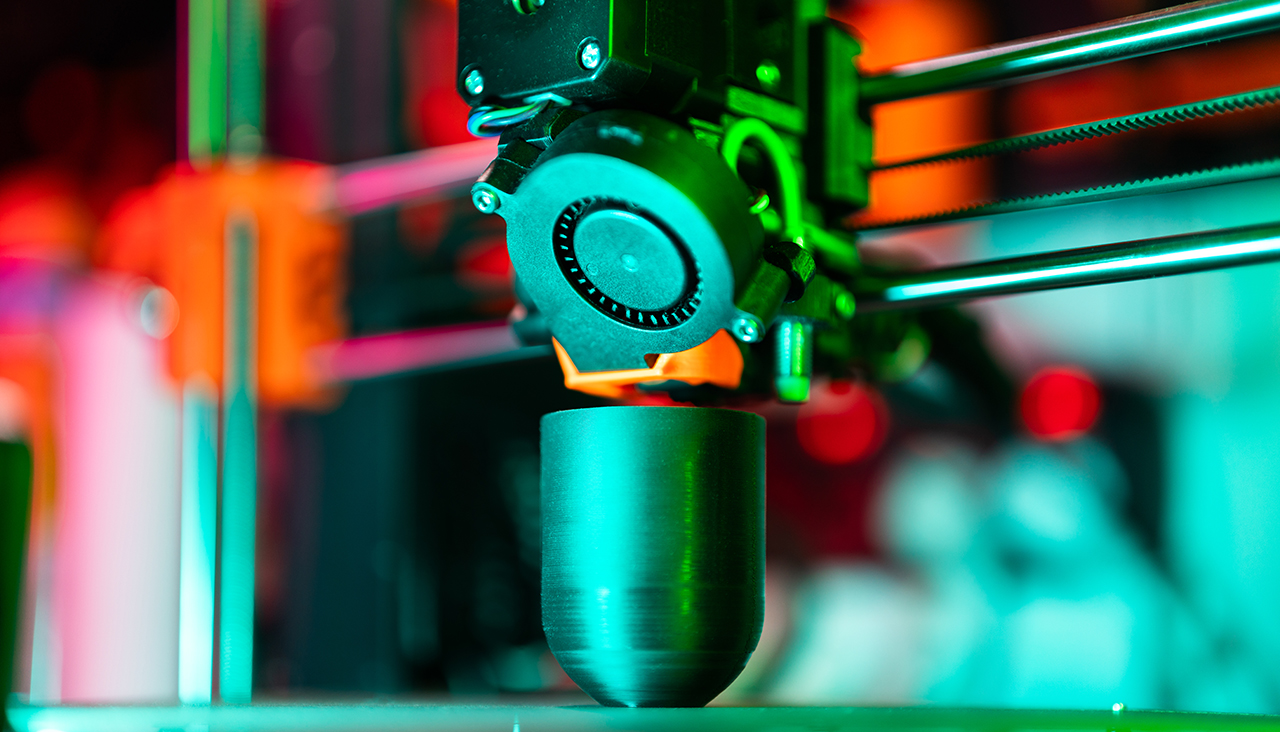
The 3D-printed construction work delivered with Nakheel under Dubai Municipality approvals, using an advanced manufacturing techniques (AMT) machine, was one of the first validated AM construction projects in the region.
That project showed how standards turn new technologies into safe, insurable, and commercially viable solutions.
Q. ASTM has established a significant presence in the Middle East in recent years, creating the United Arab Emirates Chapter in 2019. What impact has this chapter had?
A. The ASTM UAE Chapter has been a bridge between industry, academia, and regulators. It is a living example of how standards move from paper to policy — and how national visions accelerate when trust becomes part of the development model. When standards align with national strategy, they become an engine of competitiveness.
What role can organizations like ASTM’s Additive Manufacturing Center of Excellence (AM CoE) play in expanding the use of standards in the industry specifically, but also in helping to benefit the world in general?
The AM CoE is as a core pillar of future standards. It integrates research, certification, and industry in a single ecosystem, and ensures standards evolve alongside innovation, not behind it.
This model is essential for enabling the safe and scalable deployment of next-generation manufacturing technologies.
Q. What do you see when you look to the future of standards? Will AI play a role?
A. The next frontier is intelligent and digital. Standards will move from static documents to dynamic, data-driven infrastructures that connect design, manufacturing, sustainability, and verification in real time.
ASTM has a pivotal role to play in the era of AI, automation, and autonomous systems. AI needs what every technology has always needed: trust. ASTM’s job is to provide that trust through measurable, auditable, and transparent frameworks. Standards will not slow AI, they will make its progress more responsible.
I envision a world where standards are embedded inside code, digital platforms, and supply chains, providing continuous assurance across borders.
In an AI-enabled world, standards become infrastructure.
Q. What made you decide to serve on the ASTM Board of Directors? What are some developments you see on the horizon?
A. ASTM is where collaboration becomes impact. It’s where ideas from regulators, researchers, and industry turn into global solutions. I believe some important future developments will include: digital transformation of the standards ecosystem; AI governance and intelligent verification frameworks; accelerated global adoption; sustainability embedded across sectors; and empowering the next generation of engineers and researchers.
ASTM’s mission is simple but profound: to make trust the universal language of global trade, innovation, and safety.
What would you say to an early-career professional considering joining ASTM?
Don’t wait to be experienced to lead — lead by engaging. ASTM is where curiosity becomes impact and expertise becomes legacy. The next generation will write standards that protect communities, enable innovation, and build a more sustainable world. Their voice matters. ●
David Walsh is editor in chief of Standardization News.
January / February 2026