
Decarbonization
Loading...
Loading...
Loading...
Loading...
Loading...
Loading...
Loading...
Loading...
Loading...
Loading...
Loading...
Loading...
Loading...

ASTM International’s committees and standards play a crucial role in advancing Net Zero, resiliency, initiatives across industries worldwide. As a globally recognized standards development organization, ASTM bridges scientific innovation and market application through consensus-based standards that set benchmarks for performance, safety, and sustainability across construction, manufacturing, energy, and materials.
While recognizing the limitations, challenges, and evolving nature of Net Zero and carbon neutrality goals, ASTM standards support the reduction of greenhouse gas emissions by guiding the design, testing, and implementation of energy-efficient materials and technologies. For example, ASTM has developed specifications and test methods for sustainable cement, renewable fuels, hydrogen fuel standards, and photovoltaic performance, which facilitate the adoption of environmentally responsible practices in the built environment. These standards support architects, engineers, and manufacturers in meeting ambitious climate goals by providing clear pathways for evaluating and verifying the environmental performance of products and processes.
Regarding resiliency, ASTM standards help communities and infrastructure withstand and recover from adverse events—such as extreme weather, natural disasters, and climate change impacts—by establishing best practices for structural integrity, disaster preparedness, and risk assessment. Through its committees, ASTM fosters collaboration among experts to address emerging challenges, ensuring that standards are continually updated to reflect the latest scientific knowledge and technological advancements.
Overall, ASTM International’s commitment to developing and maintaining robust standards accelerates the transition to a low-carbon, resilient future by enabling consistency, innovation, and accountability across sectors, ultimately supporting global efforts to achieve Net Zero and a sustainable world. From state of the industry reporting to training and personnel certification to publications, ASTM is the knowledge source for decarbonization efforts.
Cement
Concrete & Concrete Aggregates
Nuclear Fuel Cycle
Paint and Related Coatings, Materials, and Applications
Petroleum Products, Liquid Fuels, and Lubricants
Gaseous Fuels
Activated Carbon
Nondestructive Testing
Nuclear Technology and Applications
Pesticides, Antimicrobials, and Alternative Control Agents
Solar, Geothermal and Other Alternative Energy Sources
Bioenergy and Industrial Chemicals from Biomass
Environmental Assessment, Risk Management and Corrective Action
Sustainability
Are you interested in contributing to the development of standards? Become an ASTM member and enjoy a host of professional benefits.
Our members collaborate together in a trusted, open, and transparent process to create the standards that the decarbonization industry relies on.
You'll contribute to and vote on crucial standards. Plus network with your peers, gain key industry knowledge, and get visibility for your business.


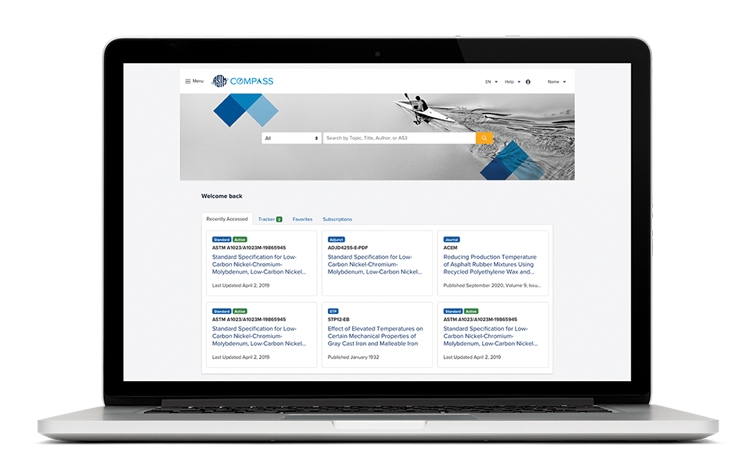
The decarbonization industry relies on thousands of ASTM standard test methods, guides, specifications, and guides. Standards are available as individual digital downloads, in print or online volumes in the Annual Book of ASTM Standards, or through a license to our flagship standards platform, ASTM Compass®.
Providing you 24/7 online access to the content developed by ASTM’s worldwide network of experts, ASTM Compass® helps you ensure safety, improve quality, and gain a competitive advantage.
Access decarbonization standards your team needs with a customized ASTM Compass® license. Add related content from AWWA, CGA, and IOGP to your license to save time and simplify internal processes.
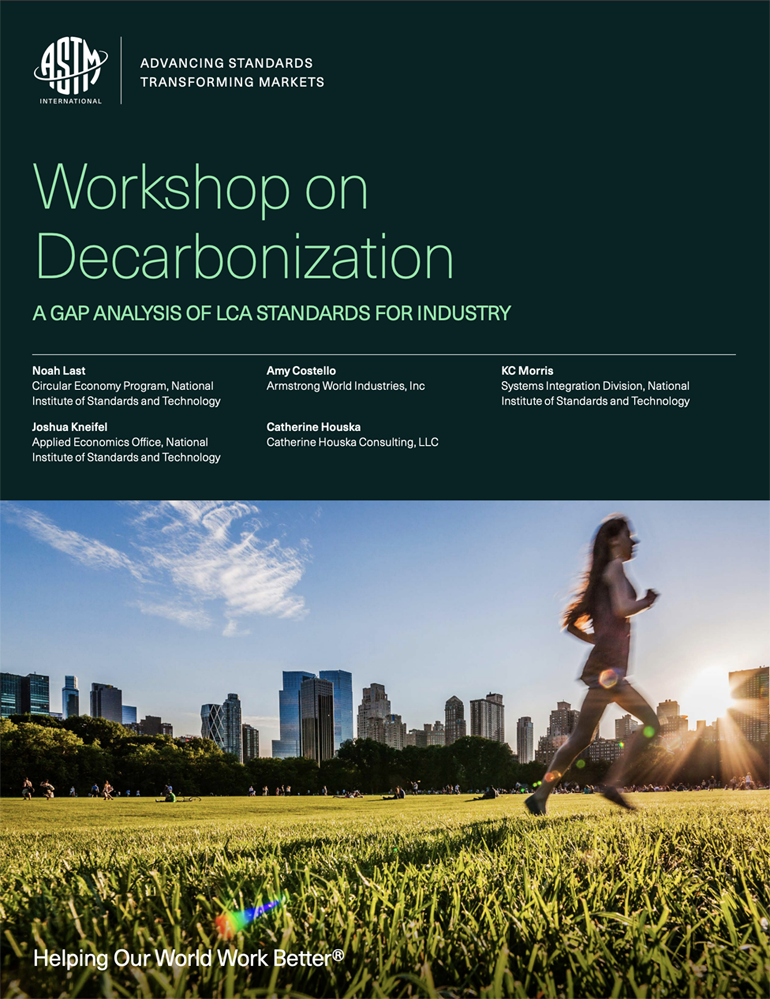
The committee on sustainability (E60), in collaboration with the National Institute of Standards and Technology (NIST), hosted the virtual “Workshop on Decarbonization: A Gap Analysis of LCA Standards for Industry” on October 10-11, 2023. This report summarizes the outcomes from the workshop.

This course is an introduction to renewable fuels for both ground and aviation use, and covers first-generation renewable fuels ethanol and biodiesel. Second-generation renewable fuels are also discussed. Hydrogen and e-fuels are also reviewed.
Get more than 100 test methods, seven chapters and 40 figures all related to biofuels. This book is a cutting-edge resource for traditional oil company laboratories and biofuels laboratories: three sections on physical testing, chemical analysis and elemental analysis.

Find all our current and historical publications in the ASTM Digital Library, powered by Silverchair. Featuring thousands of journals, books, and conference proceedings designed to support your work, research, and innovation.


On a recent episode of ASTM's Standards Impact podcast, Ivan Diaz Loya, vice president of technical services at Ozinga, joins host Dave Walsh to discuss why people should care about reducing carbon in the manufacture of concrete, the standards helping the industry move forward, and what the future for sustainable concrete holds in store.