
Loading...
Using Artificial Intelligence (AI) on ASTM standards and related intellectual property is prohibited. Violations will result in suspension of access.
By Donovan Swift
May 01, 2026
In today’s interconnected world, you can read about a new hotel in Dubai, a religious gathering in Varanasi, or a tennis match in Paris – all on your smartphone before you’ve finished your morning coffee. And the smartphone itself is a product of our shrinking world, as it was likely built with minerals mined in Africa or South America and assembled in a factory in Asia. And don’t forget your coffee: For example, 99% of coffee consumed in the U.S. is imported, with 60% coming from Brazil and Colombia. So by the time you’ve finished your breakfast, you’ve likely interacted with several products that have touched multiple countries and continents before arriving in your kitchen.
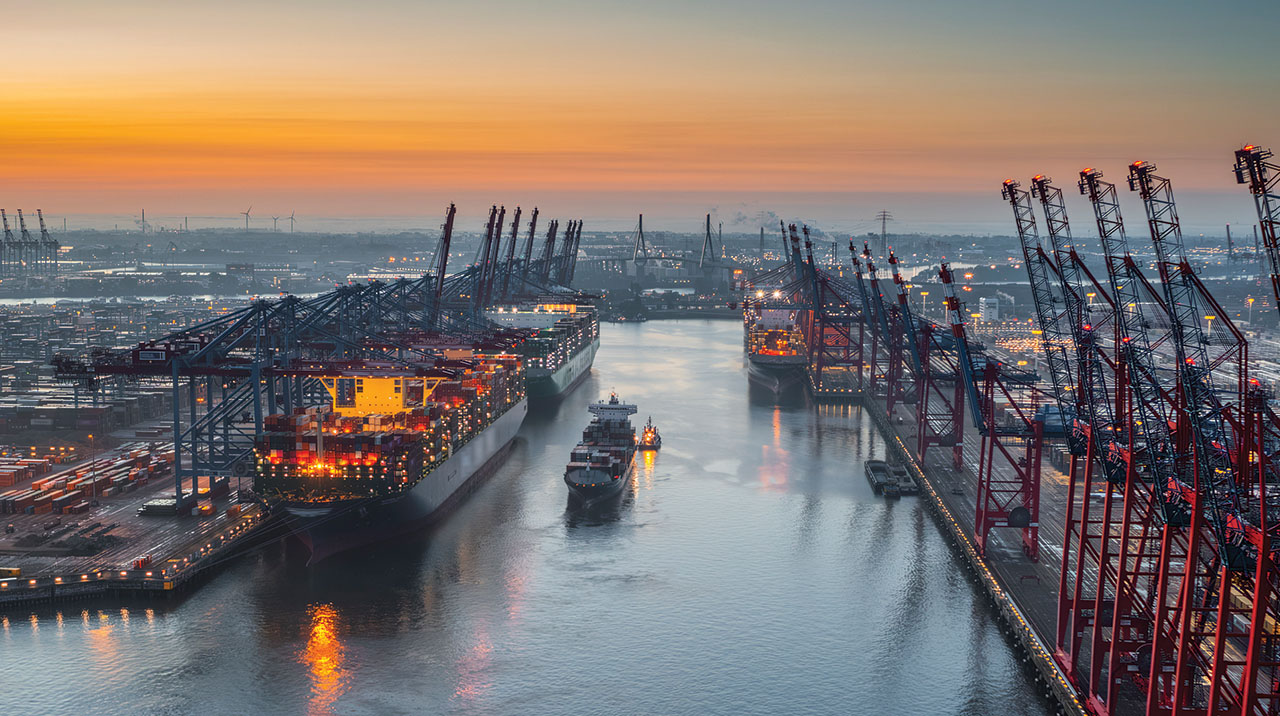
All of which is to say that we live in a globalized world connected by international trade, and many of the everyday things we use travel thousands of miles on large container ships to arrive wherever we’re sitting. So, the efficient function of the supply chain – getting coffee from that Brazilian farm to your cup – is integral to how we live our lives today. Global supply chains are full of interconnected pieces, with components from one country being shipped from a port in another country only to be assembled in another. Confidence in each link of the supply chain is essential for global trade to remain reliable and cost effective, both for trading partners as well as consumers downstream.
In such a complex chain of goods, small changes can have big impacts. In the 1950s, Malcom McLean’s standardization of the steel cargo container had a massive impact on trade and the global supply chain, according to The World Bank’s World Development Report 2025: Standards for Development. Before the shipping container, “Cargo had to be loaded piece by piece, using crates, sacks, or barrels, onto carriages, trucks, trains, and ships. McLean standardized the humble steel box, readying it for easy loading and shipping across all forms of transportation: road, rail, air, and sea. In doing so, the cost of shipping fell by at least 25 percent.”
In 1965, the International Organization for Standardization (ISO) codified the specifications of McLean’s steel containers, so the entire global market could stitch together without delay. As the report notes, “Standard containers gave the world a common commercial language. A container sealed in Shanghai could roll off a ship in Rotterdam and onto a truck.”
The benefits of the global adoption of the shipping container were exponential. “Containers delivered a 1,240 percent cumulative jump in trade among advanced economies after 15 years: by many estimates, more than the combined effect of all trade agreements of the previous half century.”
Craig Updyke, ASTM’s senior director of global policy and international trade, agrees that shared global standards are essential to freer-flowing trade. “Voluntary international consensus standards act as a shared basis for confidence and trust between buyers and sellers and between government regulators and regulated parties,” he says. “The member countries of the World Trade Organization (WTO) agreed that consensus development and broad use of international standards can prevent unnecessary barriers to trade.”
So, the benefits of standards and a standardized supply chain are clear: Less variability means lower handling costs, fewer delays, and greater confidence in product integrity, which allows for more trade between international partners and greater satisfaction for consumers.
ASTM International has standards geared toward strengthening confidence in today’s lengthy and often complex supply chains. The committee on digital information in the supply chain (F49) has created standards to help remove obstacles and keep trade flowing without delay.
Michael Coner, founder of Blockticity and F49 member, says interoperable standards are essential for the smooth operation of the supply chain. “Standardization creates a common language for how data, documents, and processes are structured and validated across the supply chain,” he says. “When manufacturers, regulators, and customs authorities align on consistent formats and requirements, it reduces friction at borders, speeds up inspections, and minimizes disputes. This leads to faster clearance, lower compliance costs, and greater confidence that goods meet regulatory and contractual obligations.”
Standards help create a digital record and track specific products that change hands at the border or at shipping ports. This helps to ensure that specific goods meet the regulations and specifications of whichever importing country. It also allows countries to verify product origins for tariff purposes.
READ MORE: New Suite of Supply Chain Standards
Coner says the standard guide for supply chain traceability, authentication, verification, validation, and oversight using emerging technologies including blockchain (D8558) and the standard terminology for goods movement process (GMP) (F3682) are especially key in verifying products and keeping the supply chain moving seamlessly.
“Standards like D8558 and F3682 define how critical information — such as origin data, testing results, and chain-of-custody documentation — is captured, structured, and verified,” he says. “By doing so, they ensure that a document or dataset issued in one country can be understood and trusted in another. For example, a certificate of analysis (COA) or conformity record that follows a recognized standard allows importers, regulators, and partners to independently verify its authenticity and completeness, reducing the risk of fraud, misrepresentation, or delays in cross-border trade.”
“D8558 enables the linkage of COAs and certificates of conformity (COCs) to establish genealogical traceability across the supply chain,” Coner adds. “This means materials can be traced from raw inputs through intermediate processing stages to final products.”
Coffee is one example of a common U.S. import that standards help trace from farm to cup. “It creates a traceable, verifiable record of the product’s journey from farm to export,” Coner says. “At the point of origin, key data such as farm location, cooperative aggregation, harvesting practices, and processing methods are captured and linked to supporting documents like certificates of origin, sustainability attestations, and shipping records.”
“These documents are authenticated as tamper-evident records, ensuring they cannot be altered once issued, and are then tracked through each stage of the supply chain including milling, storage, and export,” Coner adds. “The standard enables verification of claims related to origin, deforestation compliance, and ethical sourcing by maintaining a continuous chain of custody. By the time the coffee reaches importers or regulators, all documentation can be validated against its original source, allowing stakeholders to confirm that the product meets regulatory and market requirements.”
Michael Darden, committee member and founder of DFM Data Corp., says the recently published standard guide for applying goods movement process codes in common approaches to transport management (F3803) and the standard practice for applying a goods movement process code as suffix to the ISO transport unit identifier (F3804) are important complements to D8558. These guides help ensure that the COAs are maintained at each point of transport once the goods leave the authentication facility.
“The standards help ensure that carriers like trucking companies maintain the integrity of a product that just received a certificate of authenticity,” Darden says. “The carriers have to be able to say that the product is still in the same condition when it gets to its destination. These standards help generate a transport unit identifier and the normalizing statuses that any trucking company goes through to be able to update those events so that you have a continuous chain of custody. And these products may move five times before they get to their destination. So each of those transport moves is an exposure for some other party to disrupt the COA if they’re not part of the chain of custody. F3803 and F3804 are designated to support real-time visibility.”
This continuous chain of documentation and traceability bolsters trust between trading partners, Coner says, whether they are countries or international corporations. “By standardizing how these records are connected and verified, trading partners gain a clear, auditable view of product origin and transformation, which strengthens trust and supports regulatory compliance across jurisdictions,” he says. That way, countries know exactly how the products they import are developed and sourced, so they can verify that the products meet specific climate impact or other regulations. Countries can also trace the product origin and transport journey, so regulators can make sure exporting countries are not circumventing tariffs, e.g., by first sending a product to a different country before it is exported to its true destination.

Standards help trace coffee imports from farm to cup.
Different countries have different regulatory specifications, so in a world of global trade, it’s essential that trade partners stay abreast of market access requirements. This can be especially true for countries that may not have had a seat at the table when regulations or incorporated standards were developed. As the World Development Report notes, Mozambique sends nearly 90% of its aluminum exports to the European Union, but the EU has recently imposed a carbon emissions policy that may impact all imports. “Firms that export their goods to the EU must measure, report, and verify the emissions their products cause, in accordance with established standards,” the report says. Exporters to the EU who can’t adapt to the new regulations may have to pay a hefty tax on their exports or miss out on the market altogether.
“Adoption of international standards allows smaller and developing countries to align with global trade expectations and demonstrate voluntary compliance,” Coner says. “Without this alignment, exporters can face delays, increased inspections, or even exclusion from key markets.”
FOR YOU: Trade Compliance in Global Supply Chains
That’s why it’s wise for countries to align with international standards and become part of the standards-development process themselves, Updyke says.
“The WTO agreement on technical barriers to trade (TBT) directs governments to look to international standards first when seeking to write technical regulations for their economy,” Updyke says. “The proverbial ‘spaghetti bowl’ of overlapping, duplicative, contradictory, or competing standards and technical regulations can be reduced by leveraging and aligning with existing standards. Countries should also get involved in standards development to bring their requirements into the global standard and share their knowledge and know-how.”
ASTM’s memorandum of understanding (MoU) program helps countries develop standards for their own purposes, as well as align with international standards. The MoU program gives countries the ability to reference ASTM standards as they develop national standards of their own.
“MoU partners can adopt, align, and use ASTM standards as a reference or starting point for developing a national standard,” says Jim Olshefsky, ASTM’s head of global outreach. “Greater alignment provides broader common ground and lowers potential conformity-assessment costs.”
Since ASTM standards are widely recognized international standards, countries that reference them may find it easier to align their national standards with international standards and therefore avoid penalties or exclusion from large trading markets.
For example, in 2025, Chris Penk, New Zealand’s Minister for Building and Construction, allowed the use of standards from ASTM, ISO, and other SDOs to “make it easier to use building products from recognized overseas jurisdictions.” In other words, aligning with recognized international standards allows countries to streamline the importing process as well, so they can benefit from products developed abroad without unnecessary regulatory delay. Similarly, the Philippines has adopted many ASTM standards for cement, steel bars, and biofuels into its national regulations, facilitating trade in trusted products.
As the world becomes more intertwined and technology continues to evolve, standards will continue to help trade run smoothly. The committee on digital information in the supply chain has several emerging work items to do just that.
“These work items are centered on defining standardized approaches for digital traceability, conformity assessment, and data integrity across global supply chains,” Coner says. “Many of these developing standards are designed to align with evolving regulatory requirements, such as forced labor compliance, tariff enforcement, and product-level traceability mandates.”
Regulations change, as do the demands for specific products. Future technology may require minerals from various regions, so the more countries that contribute to international standards, the more robust those standards will be. More international involvement also means fewer countries will miss out on trade. And trade and reliable supply chains benefit everyone, from large international trading partners to consumers brewing their morning coffee. ●
May / June 2026