
Loading...
Using Artificial Intelligence (AI) on ASTM standards and related intellectual property is prohibited. Violations will result in suspension of access.

By Tim Sprinkle
Dec 16, 2025
Pet ownership is having a moment in the U.S. According to the American Pet Products Association, some 94 million American households have at least one pet, and 70% of Gen Z pet owners have two or more. That’s up by more than 12 million in the last three years. This growth is driving spending on pet-related products to record levels, reaching $152 billion in 2024.
However, this rapidly growing market has exposed an uncomfortable truth about the pet products industry: Unlike the safety standards that are common in other areas of society, there are very few to protect our pets. In fact, non-edible pet products have had virtually no regulatory oversight for decades: No unified testing protocols, durability standards, or safety thresholds.
Brian Grochal, director of safety and quality at BARK, has been working to bridge this gap since 2022, when he helped to form the subcommittee on pet products (F15.05) in an effort to define some of the first-ever safety benchmarks for the products millions buy for the animals that share their homes. The subcommittee has since grown to include more than 114 members and 86 companies from 10 countries, including a mix of manufacturers, retailers, quality and safety consultants, testing labs, academics, veterinary professionals, and more.
“It is a nice mix of stakeholders,” Grochal says. “I think having all those different perspectives is what builds the best standards.”
Unlike children’s products, which fall under the jurisdiction of the Consumer Product Safety Commission (CPSC), pet products have no federal body overseeing their design or safety. The FDA only covers pet foods and edible items, while everything else – from toys to harnesses to crates – currently functions without regulation. For F15.05, the goal is to encourage that kind of regulation from the ground up.
“Our plan in getting these standards adopted is to put out the standards and try to get all the manufacturers to agree to comply,” says Grochal. “But, more importantly, we want to get the major retailers to adopt the standards and require companies to meet them in order to sell in their stores or e-commerce marketplaces.”
Why has it taken until now for the pet industry to mobilize around safety? Part of the answer is cultural. “People are realizing pets aren't just pets anymore. They're like members of our families,” Grochal says. “People are spending money on their pets as if they were children.” And as consumer expectations shift, so does the industry's responsibility to ensure the safety of the products they are introducing into the marketplace.
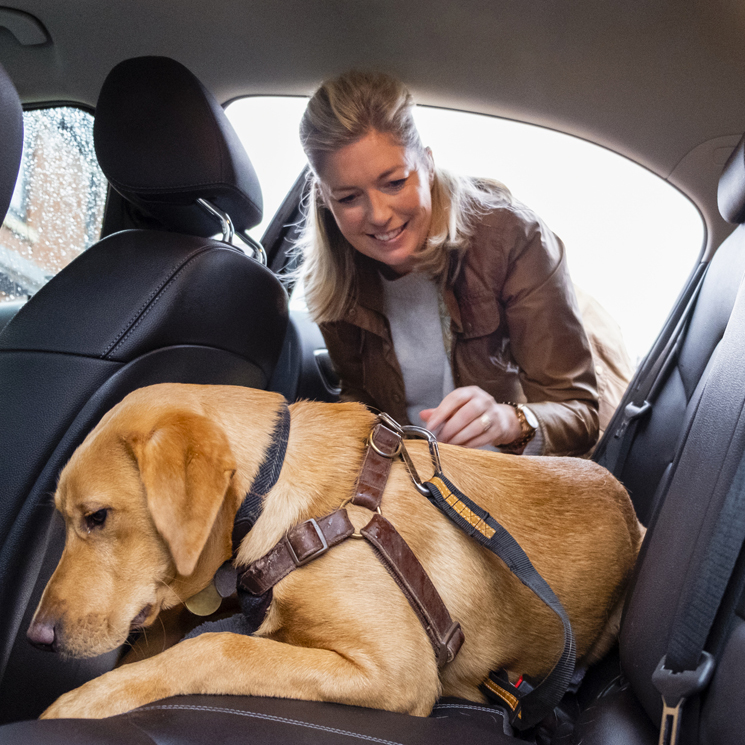
The subcommittee currently has one active standard, the standard consumer safety specification for dog harnesses for motor vehicle safety (F3725), and another four in development, including standards for dog toys, collars and harnesses, crates and kennels, and cat trees. The plan going forward is to expand the subcommittee’s reach to include pet beds, bowls, leashes, tie-offs, fish tanks, reptile lamps, and more.
Among the standards currently in development, Grochal believes that the specification for dog toy safety (WK85577) may prove to be the most impactful. Dog toys seem simple, even harmless, but the risk associated with them is higher than many realize.
“Dogs have instincts to destroy toys,” he explains, “and some of them have instincts to ingest the material afterward. That can create ingestion and choking incidents where it gets stuck in the intestines and causes severe injuries. That’s why we need strict safety standards: to ensure toys fail in safer, more controlled ways.”
For the subcommittee, these standards are just the first step in its drive for safer pet products. Unlike the children’s product industry, which relies on robust injury databases maintained by the CPSC, the pet industry lacks a centralized reporting platform. As a result, there is no reliable, industry-wide source of pet product injury data currently available. The subcommittee is taking steps to fix that, working with the American Pet Products Association to create an injury database that both veterinary professionals and consumers can use to track pet-related incidents.
This extends to scientific research as well. There is currently research being done on the pet nutrition side, but when it comes to non-edible pet products, there’s little research available. In response, F15.05 created the Pet Products Research Group in 2024 and has since raised more than $100,000 for pet safety research. They have also enrolled six participating companies and identified several research projects they’d like to pursue. The first of these projects, in partnership with the veterinary school at Colorado State University, aims to gather and consolidate essential canine anthropometric data that has never existed in a consolidated form before.
“They’ve agreed to collect 35 different measurements,” Grochal says. “Things like jaw length, head length, internal dimensions where the esophagus meets the stomach and the back of the throat. Things we can use as a basis for requirements and test methods for choking and ingestion hazards.”
Another project is exploring pet hearing safety in partnership with the University of Cincinnati, where researchers are defining the decibel levels and frequencies that may cause hearing damage in dogs. All of this research is intended to build a foundation the industry hasn’t had until now, supporting the subcommittee’s new standards and helping drive pet safety in the right direction.
Says Grochal: “If we can help set a bar for the most common injuries and bring real safety standards to pet products, that’s going to make a meaningful difference.”
Tim Sprinkle is a freelance writer based in Colorado Springs, CO. He has written for Yahoo, The Street, and other websites.