
Loading...
Using Artificial Intelligence (AI) on ASTM standards and related intellectual property is prohibited. Violations will result in suspension of access.
By Tim Sprinkle
Apr 14, 2026
There is a reason that per- and polyfluoroalkyl substances (PFAS) have become known as “forever chemicals.” Based on their composition, they can potentially stick around for hundreds or even thousands of years, making them one of the most challenging environmental concerns of our time.
As a result, PFAS management comes with a complex web of measurement, analysis, and remediation challenges that experts have struggled with for decades. And until recently, there has not been clear, standardized guidance. That’s why, over the past six-plus years, a dedicated task group within the subcommittee on corrective action (E50.04), part of the committee on environmental assessment, risk management and corrective action (E50), has worked to develop a trio of complementary standards that together offer a comprehensive framework for tackling PFAS in the environment for the first time.
“There was really a lack of guidance and a lack of clarity on how to even address PFAS in the environment,” says Stephanie Fiorenza, co-lead of the PFAS Sampling and Analytical task group, describing the field in 2019. “We felt we needed to jump in and help provide that clarity.”
There were just a handful of drinking water analytical methods for PFAS from the U.S. Environmental Protection Agency at the time, and laboratories were relying on non-standardized operating procedures to fill the gap. Practitioners working across state lines or international jurisdictions had little consistent guidance to turn to.
“When we stepped into the space, we embraced it with all its messiness and uncertainty and started there,” says Eileen Snyder, the task group’s co-founder. “We started with the analytical method selection guide, and as that evolved, more analytical methods came online.”
The result is a set of three standards designed to work together, each addressing a distinct phase of PFAS measurement and analysis. The most recent (E3511) was approved in March 2026. Over the years, this framework has attracted consistent participation from representatives from the PFAS remediation industry, consultants, laboratories, and academia, with many volunteers contributing through the group’s entire lifespan. The full trio of standards includes:
1) Standard Guide for PFAS Analytical Methods Selection (E3302): The guide helps practitioners decide which analytical methods to use when measuring PFAS. When the task group began its work, available methods were primarily calibrated for drinking water samples, creating a gap for practitioners submitting groundwater, wastewater, soil, and biota samples that required analysis under very different conditions. E3302 provides guidance on selecting appropriate methods across this broader range of environmental conditions, accounting for the QA/QC parameters each one demands.
2) Standard Guide for PFAS Data Evaluation (E3439): Once test results are in hand, researchers face the challenge of making sense of them. This guide provides a framework for assessing the quality and reliability of collected PFAS data, helping practitioners evaluate whether their data meets the necessary standards for defensible decision-making, a critical step given the legal and regulatory implications that often accompany PFAS investigations.
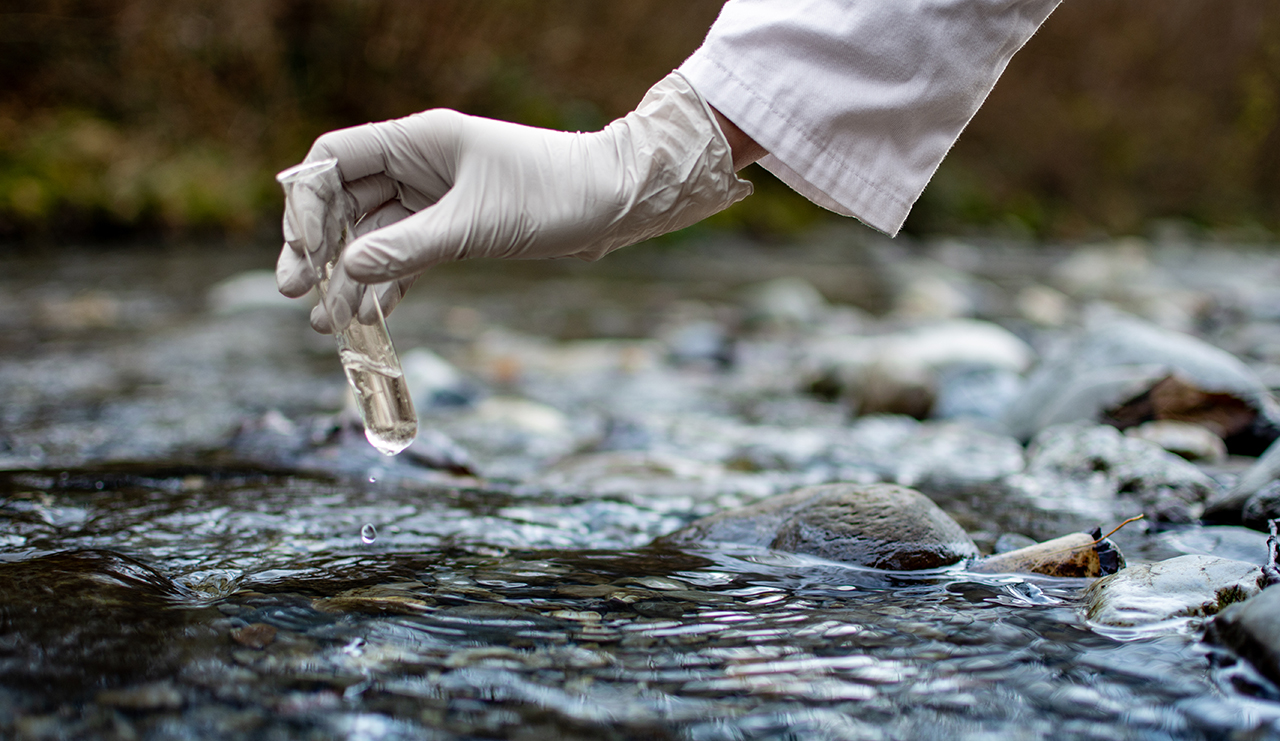
3) Standard Guide for Per- and Polyfluoroalkyl Substances (PFAS) Sampling of Environmental Media (E3511): The newest addition to E50.04’s PFAS standards, this sampling guide provides a comprehensive resource for collecting PFAS samples across a wide range of non-potable water conditions, including surface water, groundwater, and wastewater.
“E3511 is a comprehensive resource for the practitioner who may work across state lines or international jurisdictions,” explains Snyder. “It gets down into the weeds in terms of how the practitioner can interface with their specific sampling program and have the resources, the best practices, to streamline their sample and analysis work planning to execute that work and then to fact check that they met the right metrics.”
Together, these three standards form a sequence for PFAS sampling: select the appropriate methods, collect samples according to best practices, then evaluate the resulting data.
The task group has already turned its attention to a fourth standard, currently a work item: the guide for PFAS source differentiation approaches using forensic applications (WK96796). As PFAS contamination often involves contributions from multiple sources — manufacturers, unintentional users, wastewater treatment facilities, background environmental levels, and more — determining who exactly is responsible for what has become an increasingly urgent legal and regulatory question. This guide will help practitioners and regulators assign forensic “signatures” to different PFAS sources and distinguish them from background conditions.
“This task group collaborates actively with other task groups and other subcommittees such that our guides and our work efforts are meant to work together,” says Snyder. “We have very robust and active participation that has spanned over six years, and we're inviting participation in our newest guide." ●
Tim Sprinkle is a freelance writer based in Colorado Springs, CO. He has written for Yahoo, The Street, and other websites.

