
Loading...
Using Artificial Intelligence (AI) on ASTM standards and related intellectual property is prohibited. Violations will result in suspension of access.
May 01, 2026
The Philippine Clean Air Act of 1999 (RA 8749) recognizes that fuel quality is a critical determinant of air pollution and emissions performance. One of its core mandates is to prevent, reduce, and control air pollution at the source, and this includes regulating fuels and fuel additives used in mobile and stationary sources. The law adopts the principle that cleaner fuels enable cleaner engine technologies, thereby reducing harmful emissions such as sulfur oxide (SOx), nitrogen oxide (NOx), particulate matter (PM), carbon monoxide (CO), and toxic air pollutants.
Under RA 8749, the government is mandated to 1) set and enforce standards for fuel quality and fuel additives that are consistent with the goals of improving air quality and protecting public health; 2) ensure that no fuel or fuel additive may be sold, distributed, or used unless it complies with the prescribed standards; and 3) prohibit the use of fuel additives that increase toxic emissions, degrade emission-control systems, or pose risks to public health and the environment.
The law places strong emphasis on performance-based standards, focusing on emissions impact rather than chemical composition alone, as well as internationally aligned specifications.
The law mandates the creation of multi-sectoral technical bodies for fuel and fuel-additive standards development, known as the Philippine National Standards (PNS). The PNS for petroleum products and facilities, as set by the Technical Committee on Petroleum Products and Additives (TCPPA) and Technical Committee on Petroleum Processes and Facilities (TCPPF), through the Philippines Department of Energy (DOE), ensures the applicability and compatibility of fuels to the current requirement of consumers, the transport sector, and manufacturers served by the downstream oil industry. The TCPPA and TCPPF are composed of government regulators, industry stakeholders, and academic and advocacy groups. This ensures transparency, balance, and credibility, preventing petroleum products and facilities standards from being dictated solely by either regulators or industry.
The PNS also ensures that the Philippines embraces global harmonization with international trends toward environmental protection, i.e., improving fuel composition for increased efficiency and reduced emissions – and initiating biofuels and biofuel-blends programs. In addition, the PNS serves as an engineering design lead on safety guides and practices for petroleum facility workers in reference to safety, health, and environmental protection, as well as implementing appropriate mitigation measures as observed and practiced in the downstream oil
industry sector.
The TCPPA and TCPPF have extensively used ASTM International standards as reference documents in developing their standards. ASTM standards offer internationally recognized test methods, specifications, and practices that ensure fuel quality is accurately measured, consistently regulated, and aligned with evolving vehicle technologies and emission-control requirements.
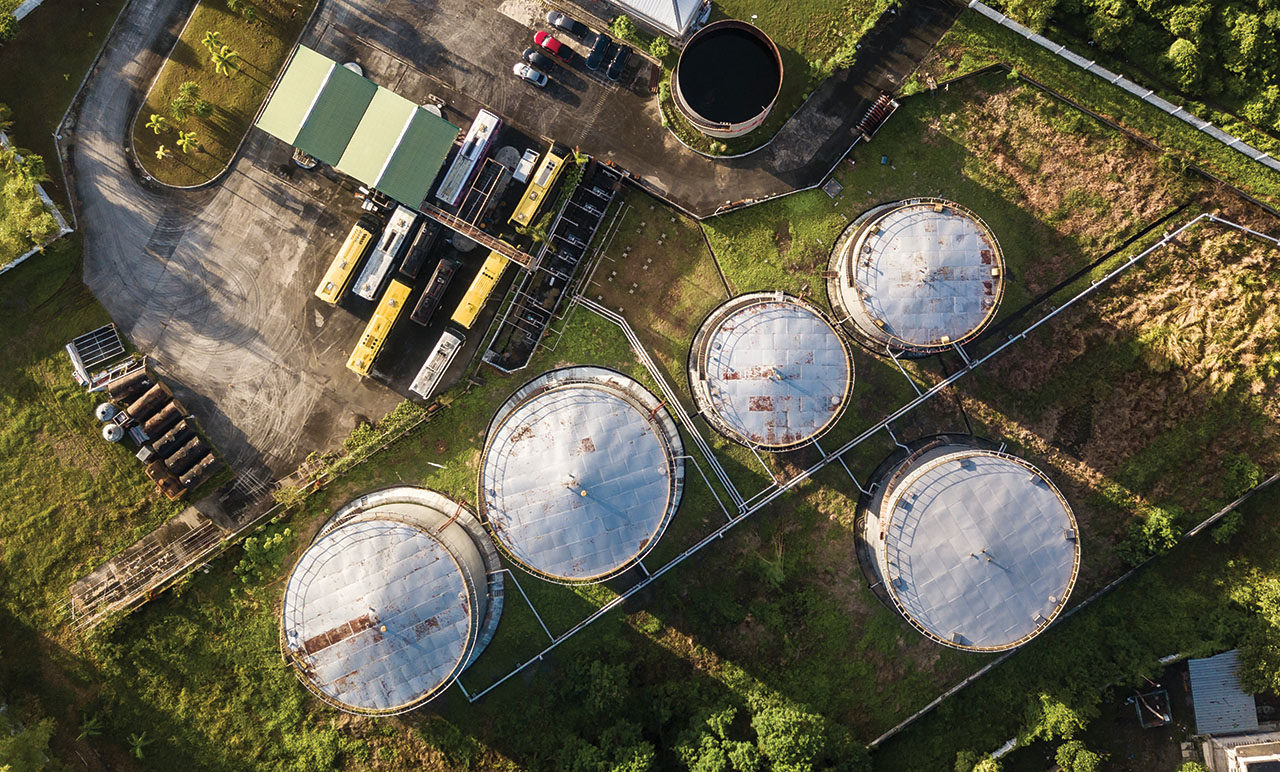
The standards play a role in the development, testing, and product quality monitoring of various fuel products, including biodiesel, bioethanol, coconut methyl ester, liquefied petroleum gas, and kerosene. Standards that have been referenced by the PNS include:
With respect to petroleum processes and facilities, standards have been adopted to help ensure that facilities are constructed and maintained according to best safety practices. Standards that have been adopted as references include:
The referencing of ASTM standards, as well as the continuous updating of petroleum product quality and facility standards, helps ensure that the country is in harmony with international standards.
Additionally, new facilities in the fuels industry will have to incorporate resiliency standards in their design to be better equipped at dealing with and mitigating the challenges posed by the changing climate. Research studies are also to be carried out for emerging fuel technologies such as sustainable aviation fuel and other alternative fuels to improve efficiency and reduce emissions. These actions are consistent with the DOE’s vision of a low-carbon future, improved energy security, and decreased dependence on imported petroleum products. Standards will be essential in both efforts.
The continuous adoption and use of ASTM standards provide the DOE with a robust, technical foundation that is essential to the development, updating, and enforcement of PNS, particularly for fuels and environmental protection. By anchoring PNS with ASTM standards, the DOE strengthens regulatory credibility, promotes harmonization with global fuel markets, supports compliance with the Clean Air Act, and enables evidence-based decisions that protect public health and the environment
while ensuring fuel reliability and
energy security. ●
May / June 2026