

Loading...
Using Artificial Intelligence (AI) on ASTM standards and related intellectual property is prohibited. Violations will result in suspension of access.
By By David Walsh
Apr 30, 2026
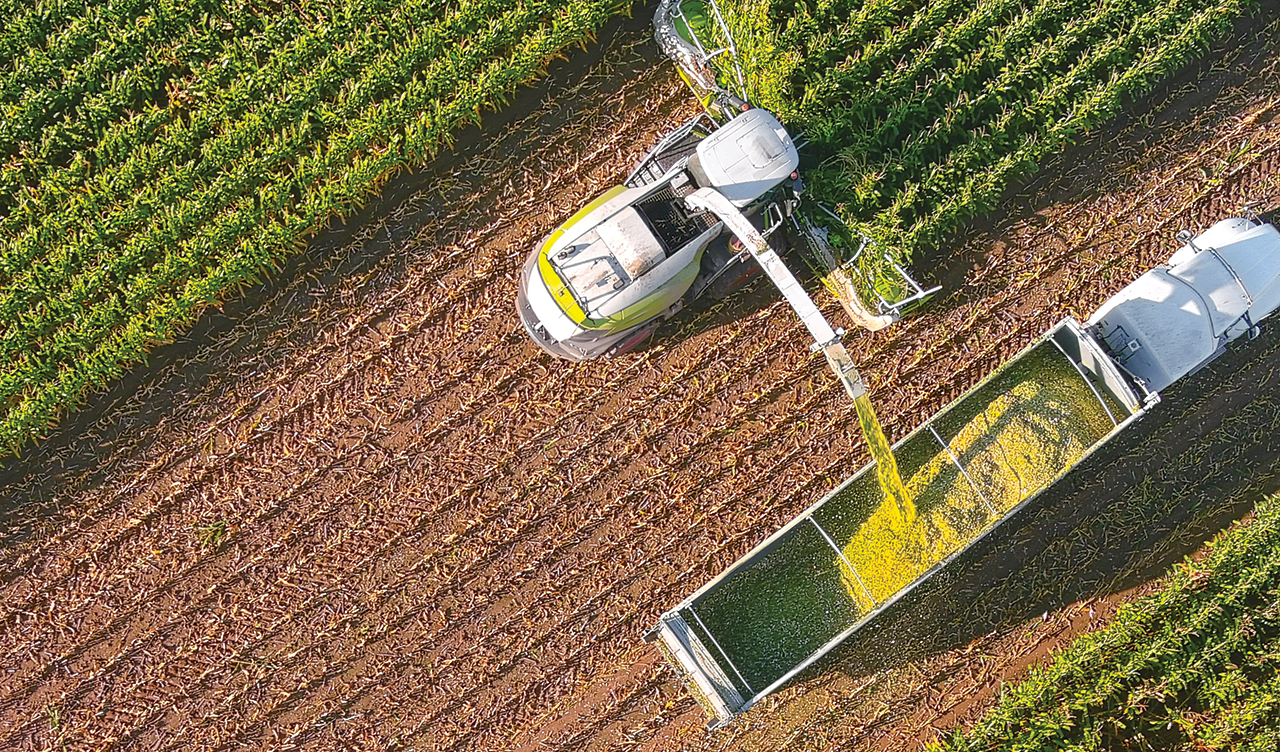
When most people think of corn, they think of going to the movies – or here in 2026, streaming Netflix and popping their own snack at home. Some might also think of fast-food tacos, a favorite breakfast cereal, or even one of those salty snacks that was colored bright orange until recently. What may not come readily to mind is the subject of biofuels, and specifically, ethanol, which is an alcohol produced from fermented plant materials that can also be used as fuel in many motor vehicles. However, if the average person were to take a look at the state of the agriculture industry in 2026, they might be surprised to find that much of the world’s corn production – and specifically corn production in the U.S. – does not go into the concession-stand bucket or the convenience-store snack bag at all.
According to the U.S. Department of Agriculture (USDA), a whopping 40% of the U.S. corn crop is used for ethanol and related co-products, a staggering 5 billion bushels annually. Globally, the numbers are even more impressive, with the USDA estimating total production of 1.1–1.2 billion metric tonnes per year, noting that China and Brazil are the second and third largest producers, respectively, after the U.S. In short, corn has become a critical part of everyday life, with its impact stretching far beyond that of a dietary staple.
And with over 60 countries currently imposing ethanol mandates of some kind for the petroleum industry, the need for standards to help convert this abundant resource into usable fuel for cars, trucks, and more is essential. Enter ASTM International’s committee on bioenergy and industrial chemicals from biomass (E48), which oversees multiple standards related to bioenergy in general – and ethanol specifically.
While regulations in different countries may change, and the prioritization of various energy sources may shift, the global reliance on ethanol as a consistent part of the energy mix in the form of blended gasoline is here to stay.
“Certainly the U.S. is in the headlines right now, reshifting or refocusing on what energy requirements might be needed,” says Earl Christensen, vice president of research and development with Alder Renewables and chair of E48. “But ASTM is an international organization, and in E48, we focus on consensus standards that can be applied around the globe. So although one country may be focused on their petroleum resources, there’s a push in other parts of the globe for bioenergy production and carbon abatement. So really these standards are meant to be utilized throughout the world.”
Tessa Schmitz, director of quality assurance at Soliton and fellow E48 member, agrees. “There was a big push for EVs in the last few years, so that was a big topic in the ethanol industry,” she says. “And now we’ve kind of swung back to more liquid fuels. Presently there’s a big push for E15 [gasoline with 15% ethanol] nationwide, year-round. So the emphasis changes, but I think ethanol is always part of the discussion, and I think it always will be part of the discussion, especially as we start to consider marine-based drop-in fuels and sustainable aviation fuels. Those things are coming.”
Global ethanol production reached 31.2 billion gallons in 2024, according to the Renewable Fuels Association, with the U.S. and Brazil accounting for 80% of that number. And in addition to all the other processes that must scale-up as production increases, so too, must testing.
Developed by the subcommittee on biomass conversion (E48.05), the newly published standard test method for determination of hemicellulose in herbaceous biomass by high performance liquid chromatography (E3503) builds on previous standards such as the test method for determination of carbohydrates in biomass by HPLC (E1758). In simplest terms, it is meant to make testing of biomass faster and more efficient. However, there is more to it than that.

New standards will make testing faster, while allowing for the conversion of new sugars into ethanol.
“So [E3503] is much faster than a lot of the traditional methods that were out there,” says Schmitz. “But we’re not getting at the cellulose portion of the feedstock. This is just going to look at the hemicellulose.”
This is an important distinction according to Justin Sluiter, research technologist with the National Laboratory of the Rockies and vice chair of the subcommittee on biomass conversion (E48.05). The hope is that in addition to making operations more efficient, the new test method will also expand the sources of ethanol that can be converted by analyzing hemicellulose.
Cellulose, the long, unbranched, crystalline chain of glucose, has long been the primary source of ethanol. Hemicellulose on the other hand, is a shorter, branched polymer containing multiple sugars.
“This test is a bigger step in that it’s the hemicellulose being tested,” says Sluiter. “It’s made up of non-glucose sugars. The hope is that we’re converting new sugars that have not been converted in the past into product ethanol in this case, and we needed a method that would quantify that conversion.”
Schmitz also emphasized the importance of ongoing method development within E48 to support low carbon-intensity specifications in the ethanol industry. A complementary standard, the test method for determination of cellulose/hemicellulose-derived glucan and galactan content in solid corn, corn-sorghum blended and sorghum biomass samples (E3417), was published in May of 2024.
While E3503 and E3417 are not used in direct conjunction, Schmitz notes that each method contributes to a broader understanding of biomass composition and conversion. “Together, these efforts begin to build a more complete picture of carbohydrate availability and utilization during fermentation,” she says.
However, Christensen believes that the impact E3503 specifically will have on production will be a game changer in the ethanol industry’s corner of the analytical chemistry world.
“[Traditional methods] are very time consuming and not something that I would describe as a high-throughput method,” he says. “This new analysis can be performed in a fraction of the amount of time, and that leads to lower cost, faster turnaround of data, quicker decision making. The ability to do the same type of measurement in a shorter period of time allows for faster development, faster research, and more accessibility to these types of analysis.”
Together, these elements lead to increased productivity, faster time to market, and more successful business operations at the organizational level – and potentially, large-scale growth for the industry as a whole.
As mentioned previously, corn does play a major role as a staple in the world’s food supply, and the corn ethanol industry in particular produces high-purity biogenic carbon dioxide as a byproduct of fermentation. This gas can be utilized for carbonation in beverages ranging from your favorite soda, to the craft beer you enjoy on the weekend, to the sparkling water on the table at your favorite restaurant. It can also be used to produce dry ice and plays a role in meat processing. The processes used in these applications can utilize the HPLC test methods laid out by the bioenergy and industrial chemicals from biomass committee.
“In the beverage industry, a lot of the carbon dioxide used comes from the corn ethanol industry,” says Sluiter. “And then what you consider to be fiber in the food you eat – the hemicellulose is what we’re talking about analyzing with E3503. So it could be used across industries.”
Looking ahead, expanding the scope of the standard to cover even more applications is a primary goal: “What we’re trying to do is expand scope of methods,” says Sluiter. “We have some well-established methods, and we want to see if we can apply them to different feedstocks or use them under different conditions.”
Christensen agrees. “We’re looking at other existing committees and the test methods that could be applied to biomass that may be methods for coal or other solids. Outside of these test methods, E48 also has work going on in sustainability, and specifically, how we define sustainability.”
In order to stay ahead of the curve, continually update test methods and other standards, and remain at the forefront of industry, participation is key – from all corners of the field.
“We need the enzyme providers, the yeast providers, because that’s how you move industry forward,” says Schmitz. “We have to bring everyone together and get on the same page. And that’s how we really make strides as an industry.”
Sluiter says increased engagement is essential. “We would love to have more engagement. We have a lot of important players already at the table and that’s amazing. I would love to see more producers, more people who are actually going to be using these methods on an active basis.”
“I would second that,” says Christensen. “The more engagement we have from the community, the better.” ●
David Walsh is editor in chief of Standardization News.
May / June 2026


